Tibet Travel guide
-Travel to Tibet Tibet is considered to be the Holy Land attracting many domestic and international visitor. For travellers it was a land of treasure and riches, for its peculiar geography features and unique natural scenery, featured ethnic culture and characteristic local residential customs and habits. Tibet, the roof of the world, is located on Qinghai-Tibet Platean in the southwest frontier of China, with the average elevation of over 4,000 meters. For centuries this mysterious Buddhist holy place, is locked away in its mountain fastness of Himalaya, and has exercised a unique hold on the imagination of the west. Welcome to check out our travel guide to Tibet. Don't hesitate to contact us if you plan to travel to Tibet. We will provide the professional advice, individual itinerary and excellent travel service.
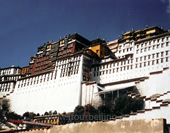 Tibet is without doubt one of the most remarkable places to travel in China. It offers fabulous monastery sights, breathtaking high-altitude treks, stunning views of the world's highest mountains and some of the nicest people you will ever meet. The best starting place to Travel Tibet is the capital city Lhasa, where you can find the famous Potala palace. Shopping in Tibet is a great experience with an abundance of interesting and unique items and souvenirs to buy. The famous Barkhor Street in Lhasa is renowned for its authentic vendors selling traditional wares such as hand woven blankets and beaded jewelry. Tibet has a host of guided groups available, which take you across the spectacular land, stopping off at all the main travel attractions and sights.
Transportation to and from Tibet is now very convenient and easily accessible. There are many straight flights heading there from most major cities in China. Or You can take buses, although the newly finished Tibet Railway Line is a memorable experience which travels through picturesque landscape and terrain. Undoubtedly, the best time of year to travel Tibet is between June and August. However, there are two things you have to take into account when traveling there. The first is the political situation, which results in that you need a separate travel permit to get in, besides your China visa; the second advice is on altitude sickness. The most convenient way to travel Tibet is still to find a reliable travel service to arrange everything for you.
The Tibet Guide - Attractions
- The Potala PalaceThe Potala Palace, the most widely recognized symbol of Tibet and also the symbol of Lhasa, is a large-scale castle style palace complex. It is surely the top travel destination in Tibet. The Potala Palace was originally built to ...
- The Sera MonasterySera Monastery, fully known as Sera Mahayana Temple, is one of the six major temples of the Gelug Sect of Tibetan Buddhism. Located three kilometers away in the northern suburb of Lhasa, Sera Monastery was first built in 1419 and ...
- The NorbulingkaThe Norbulingka, literally Treasure Park, is the Summer Palace for the Dalai Lamas located in the western suburbs of Lhasa. The Norbulingka park was built in 1740's by the 7th Dalai Lama at the bank of Kyichu River about one kilom...
- The Jokhang TempleThe Jokhang Temple, the most sacred and intensely spiritual holy temple in Tibet for most Tibetans, is located on Barkhor Square in Lhasa. The Jokhang Temple, also known as Jokhang Monastery was built in 647 during Tang Dynasty by...
- The Barkhor StreetBarkhor Street is a circular street located around the Jokhang Temple in the center of the ancient city of Lhasa, the oldest street in the city. The Barkhor Street is the central place in Tibet for culture, religion, economy, ethn...
- The Tibet MuseumThe Tibet Museum, opened in 1999, is the first museum with modern features displaying the brilliant thousands of years history and splendid culture of TIbet. Located to the southeast of Norbulingka in lhasa, the Tibet Museum cover...
- The Tibetan Traditional HospitalThe Tibet Traditional Hospital was founded in 1964. It is located in the capital of Tibet, Lhasa and is the biggest Tibetan traditional medicine producing center in China. The Tibet Traditional Hospital lies in the old town of Lha...
- The New Palace of PanchenThe New Palace of Panchen is one of the palace of the Tibetan Buddist leader the Panchen Lama. Situated to the south of the Tashilhunpo Monastery, the New Palace of Panchen was built in 1954 by the 10th Panchen Lama as his summer ...
- The Drepung MonasteryThe Drepung Monastery is one of the six major Tibetan Buddhist Temple of Gelug Sect and the largest temple in the world. The Drepung Monastery is the largest of all Tibetan monasteries and is located on the Gambo Utse mountain wit...
- Yamdrok Yumtso LakeThe Yamdrok Yumtso Lake, literally Swan Lake in Tibetan language, is one of the largest lakes in Tibet and one of three holy lakes in the Tibet region. The Yamdrok Yumtso Lake lies to the south of Yarlung Tsangpo River in the Shan...
- Tashilhunpo MonasteryThe Tashilumpo Monastery, literally known as ‘Auspicious Sumeru Temple’, is the largest temple in the town of Shigatse. The Tashilumpo Monastery is the traditional seat of successive Panchen Lamas, and the second highe...
- Gyangtse Old StreetThe Gyangtse old street is located very close to the Palkhor Monastery. It is long and comfortably wide street paved with flagstones and clay. Not like the Parkhor Street in Lhasa, the Gyangtse old street shows the true daily life...
- YangpachenYangpachen is a small town more than 90 kilometers northwest from the city of Lhasa. Yangpachen is not so hot as other travel destinations in Tibet, but famous for it treasure, all manner of hot springs. In the past Yangpachen was...
- Lake NamtsoNamtso Lake, literally known as Tengri Nor in Mongolian language, is the second largest saltwater lake. The name of Namtso Lake and Tengri Nor both mean ‘Heavenly Lake’. Namtso Lake is at the border between Damxung Cou...
- Songtsen GampoSongtsen Gampo, the son of Namri Songtsen, is the forefather of Tibetan Buddhism. Songtsen Gampo is well-known for his great achievement of the communication of Tibet and China. Greatly influenced by his father, Songtsen Gampo had...
- Himalayan RangesThe Himalaya Ranges is one of the most magnificent natural wonders in the world. The name of Himalaya comes from Sanckrit ‘Hima’ and ‘alaya’, which mean snow and domain, by Indian pilgrims traveling in the ...
- Palkhor MonasteryPalkhor Monastery, also known as Palcho Monastery or Pelkor Chode Monastery or Shekar Gyantse, is the main monatery located 3900 meters high in the northeast corner of Gyangtse County over 200 kilometers south of Lhasa and around ...
- Lhasa Carpet FactoryLhasa Carpet Factory is situated at Hebalin to the east of the old city of Lhasa. It is one of the remarkable enterprises in Tibet Autonomous Region, mainly producing traditional Tibetan carpets.In the factory, hundreds of experie...
- Everest Base CampMount Everest (8848m), the Highest Mountain on the earth, Mt. Everest is called in Nepali Sagarmatha Himal it means "Head of Ocean" and for Everest Tibetan is called Mt. Qumolangma it means "Mother of the Earth.""Everest Base Camp...
- Rongbuk MonasteryRongbuk Monastery is located in the Shigatse Region, southwest of the mysterious Tibet Autonomous Region, and to the north of the oblate Mt. Everest, the highest peak in the world. Seen from here, Mt. Everest appears like a lofty ...
- Sakya MonasteryThe artistic precious items in Sakya Monastery are of volumi-nousness and high cultural relic value; therefore, it is called the Second Dunhuang. Sakya Monastery is located by the two banks of the Drongchu River and on the ridge o...
The Tibet Travel Tips
Your Question & Quick Answer*We welcome and appreciate your questions & reviews
User Comments
China Travel Guide
Booking Procedures | Terms & Conditions | Payment Methods | Links | Site Map | About Us | Contact Us | Travel Agent
Copyright 2008, All rights reserved.. itourbeijing.com professional China travel agency and China travel service
TEL: 86-10-85711972 (Universal) 1-888-288-9328 (North America) E-mail: contact@itourbeijng.com
China Travel | Beijing Travel | Shanghai Travel | Xi'an Travel | Guilin Travel |The Great Wall Travel
China Golf | Beijing Golf | Shanghai Golf | Xiamen Golf | Beijing Map | Beijing Side Trip | Yangtze Cruise | Travel Picture